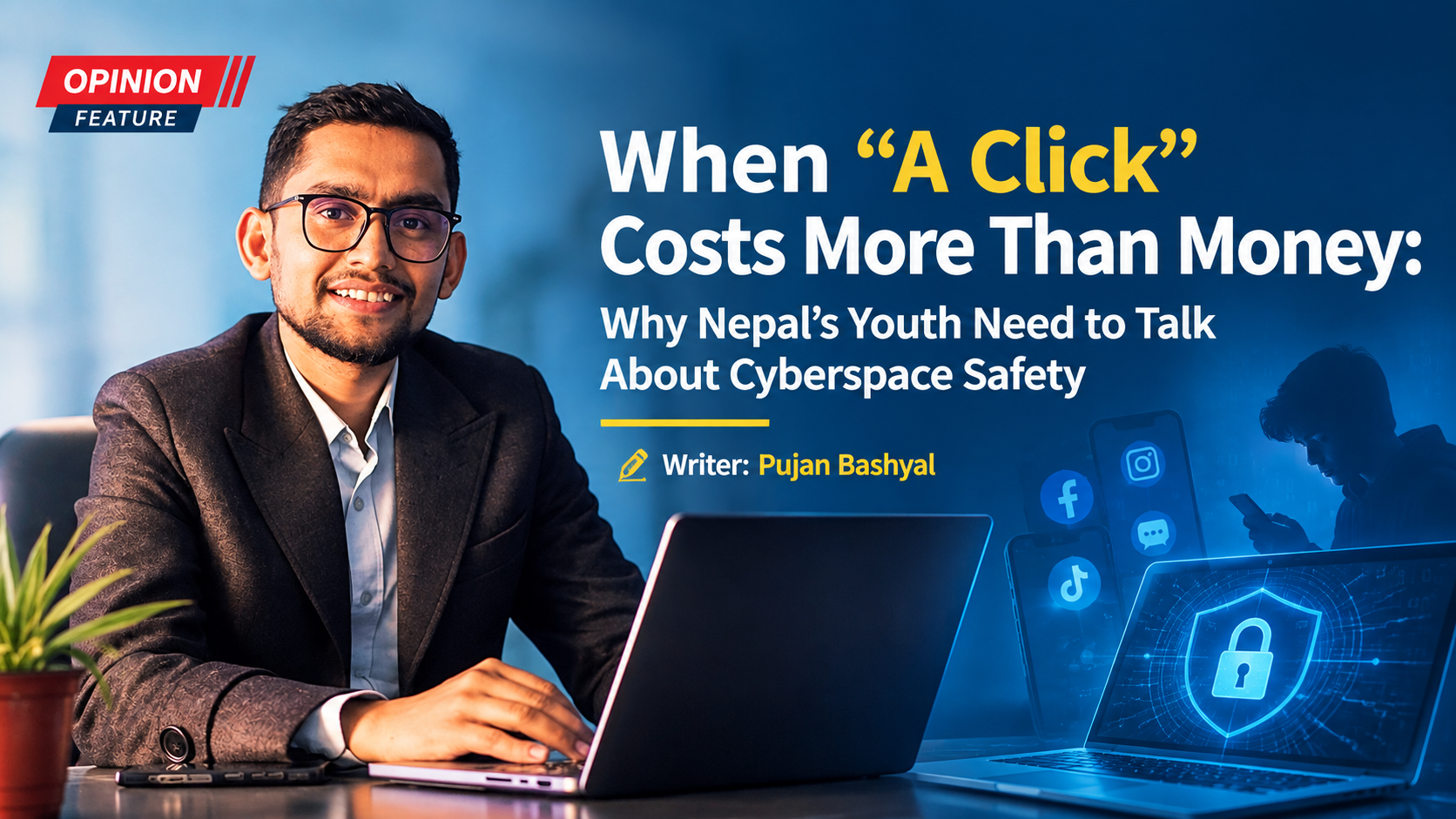

A girl in Nawalparasi gets a friend request from a stranger. A few weeks of sweet talking, video calls, some gifts, and then one day the same person is threatening to send her private pictures to her family unless she pays. Somewhere else, a boy in his college is added to an “investment group” on Telegram. He puts in some money seeing others “earning,” then finds out the whole group, including the people showing profit, was fake from the beginning. A professor gets an email for a big teaching job abroad. The offer letter was written almost word to word matching his own CV, only later realizing it was made just to trap him into paying visa and processing fees again and again. A text comes saying some costly parcel is stuck in customs, one click on the link inside, and within minutes the phone, Facebook, bank, everything is already in someone else’s hand. A student pays advance money for something seen on a TikTok shop, the page goes missing the next day, money has already moved out of the country before anyone can even file a complaint properly. Someone’s ex-partner leaks old chats in a public group. Someone’s bank OTP gets shared over a fake customer care call, and by evening the account is already zero.
These are not rare stories anymore. They are becoming almost normal, and that itself should worry us.
What happens after is where the real damage starts. First it is money, gone in a few minutes, sometimes the whole month’s salary or someone’s saving of years. Then it is identity: accounts hijacked, pictures used somewhere without permission, names attached with things a person never did. But the part that does not show on any bank statement is what comes next: the shame, the fear of people finding out, sleepless nights, not able to tell even family because “what will they think of me.” For some, this goes very far. Cases of youths attempting suicide after such incidents are not unheard of in Nepal, and that is the part which should scare us more than the money part.
And the ones most exposed to all this are exactly the ones we are not protecting enough the youth, early to digital exposure without much preparation are people of age group 15 to 25. This is the age group living almost their whole social life online, most active on new apps, most trusting of strangers met through screen, and, honestly, least aware about what the law says or where to go when something goes wrong. Also this is the age where reputation and “what people will say” matters most, which many fraudsters and bullies use as their biggest weapon. Furthermore, this group is the most emotionally unsettled, financially demanding, and vulnerable to risks. Easily lured and baited. This is why Nyaya Connects, an initiative by founder Ashma Aryal, in collaboration with JCYCN, PPDC Nepal, and SDG Studio, started its Digital Rights & Cyberspace Safety awareness series this year.
The idea is simple: people cannot fight what they do not understand, and cannot report what they do not know is even reportable. So instead of only talking about “be careful online,” which everyone already says and nobody really acts on, we wanted to actually walk participants through what the law protects, and what steps a person can take the moment something happens to them.
First session happened on August 20, 2026, titled “What Are Your Rights When Online?”, where we covered basics of privacy rights and right to information under Nepali law, specifically Article 28, the Privacy Act 2075. How Right to Information is supposed to work for an ordinary citizen, not just for journalists or lawyers or other privileged people only.
The second session, held on September 6, 2026, went deeper into cyberbullying specifically how to identify it, where to report it, and what legal protection already exists under Electronic Transactions Act, with an actual serving cyber officer from Nepal Police explaining the reporting process from his own experience, not just theory.
Both sessions had one same message underneath: you are not powerless in front of these things, if you know what to do. Reporting early works better than reporting late. Talking to someone you trust works better than carrying it alone. And a mistake made, trusting the wrong person, or clicking the wrong link does not make the victim guilty of anything.
Please remember: this is not something that happens to “someone else.” It can reach anyone with a phone and internet connection. What matters is knowing there is a way out, and that asking for help is not shameful, staying silent is the actual danger.
If you or someone you know is struggling with suicidal thoughts, help is available. Nepal’s National Suicide Prevention Helpline 1166 is free and open 24 hours a day.
If you or someone you know is facing cyberbullying, blackmail, fraud, or any other cybercrime, you can report it to the Nepal Police Cyber Bureau: 9851286770 / 9851286771, [email protected], or online at cyberbureau.nepalpolice.gov.np/report-cyber-crime — or visit your nearest police office.